

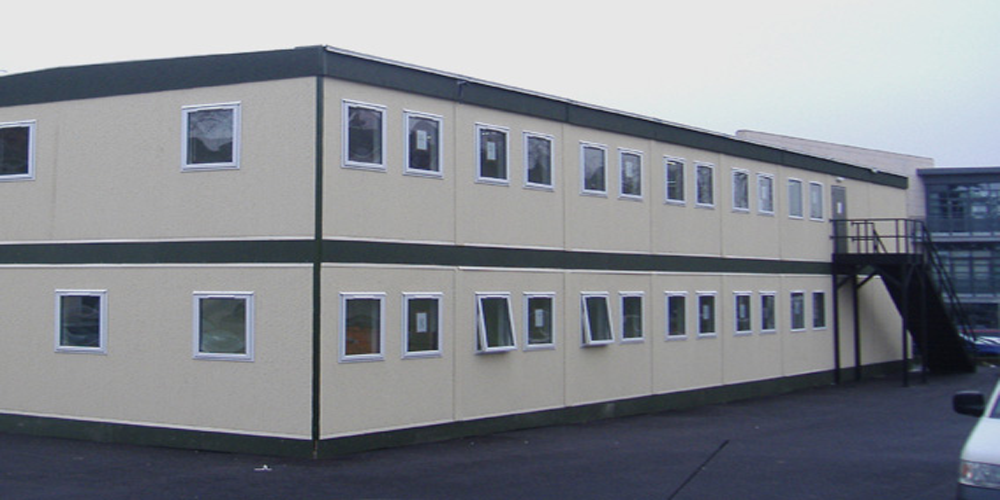
Exploring the Versatility of Portable and Modular Buildings
The way we think about buildings is changing. Today, businesses, schools, emergency services, and construction teams often need spaces that can be delivered quickly, adapted to changing needs, and moved when circumstances change.
That’s where portable and modular buildings come in.
From additional classrooms and construction site offices to mobile fire stations and emergency aid facilities, these buildings offer a practical alternative to traditional construction. They can save time and money while giving organisations the flexibility to create the space they need, when they need it.
So, what exactly makes portable and modular buildings so useful, and why are they becoming increasingly popular?
What Are Portable and Modular Buildings?
Portable and modular buildings are generally manufactured off-site, often in a controlled factory environment. Once the main components are completed, they are transported to the site and installed.
Because much of the construction takes place indoors, manufacturers can work in a more controlled environment, helping maintain consistent standards and reduce weather-related delays.
Another major advantage is flexibility. Modular buildings can be designed around the customer’s specific requirements, with different layouts, sizes, finishes, and features available depending on intended use.
And despite the name “portable,” these buildings aren’t necessarily just temporary structures. Many can provide a long-term solution and can be adapted, expanded, relocated, or repurposed as needs change.
How Are Portable Buildings Being Used?
One of modular construction’s biggest strengths is its versatility. These buildings can serve a wide range of industries and purposes.
Schools & Colleges
Schools and colleges don’t always have the luxury of planning years ahead. Student numbers can change, existing buildings may need renovation, or additional teaching space may suddenly be required.
Portable classrooms provide a relatively quick way to add extra capacity without committing to a large-scale construction project.
They can be used as classrooms, staff rooms, offices, libraries, or specialist teaching spaces, helping schools make better use of the space they already have.
Construction Sites
Construction projects are constantly changing, so the buildings supporting them need to be flexible too.
Portable site offices, welfare facilities, storage units, changing rooms, and toilets can be installed quickly and adapted as a project develops. Once the work is finished, the buildings can be removed and used elsewhere.
This makes them particularly useful for contractors managing multiple projects or working on sites where permanent buildings wouldn’t make practical sense.
Emergency Services
Speed can make all the difference during an emergency.
Portable buildings can provide valuable facilities for fire services, medical teams, aid organisations, and other emergency responders. Depending on their design, they can be used as temporary command centres, first-aid facilities, accommodation, storage areas, or operational bases.
Portable fire stations can also be useful in areas where a permanent station isn’t available or where existing emergency services need additional facilities.
Because these buildings can be transported and installed relatively quickly, they can provide much-needed infrastructure without waiting for a conventional building project to be completed.
The Key Benefits of Modular Buildings
Several reasons explain why more organisations are considering portable and modular construction.
1. Cost-Effective Construction
Building components in a controlled environment can help reduce construction time, labour requirements, and material waste. Depending on the project, this can make modular construction a cost-effective alternative to building entirely from scratch on site.
Of course, overall cost depends on factors such as size, specification, location, transportation, and installation.
2. Faster Installation
One of the biggest advantages is speed.
While site preparation is taking place, much of the building can be manufactured at the same time. This parallel approach can significantly shorten the overall project timeline compared with conventional construction.
For organisations that need additional space quickly, this can be a major benefit.
3. Flexibility
Needs change. A school might need another classroom next year, while a construction company may need to move its site office when a project ends.
Modular buildings can be designed with this kind of flexibility in mind. You can sometimes add modules, adapt layouts, and potentially relocate buildings or give them a new purpose.
4. A More Sustainable Approach
Modular construction can also offer environmental benefits.
Factory manufacturing lets teams measure and manage materials more efficiently, which can reduce waste. Some modular buildings can also be reused or relocated rather than demolished when their original purpose ends.
Energy-efficient insulation, renewable energy systems, and sustainable materials can further improve a modular building’s environmental performance.
5. Mobility
Perhaps the most obvious advantage is that portable buildings can go where they’re needed.
Instead of treating a building as a permanent fixture, organisations can view it as a flexible resource they can move, reuse, and adapt over time.
That can be particularly valuable for temporary projects, emergency response, remote locations, and organisations whose space requirements are constantly changing.
What Does the Future Hold?
Portable and modular construction has come a long way, and technology is continuing to push the industry forward.
New materials, improved manufacturing techniques, smart building technology, and renewable energy systems are opening up even more possibilities.
For example, solar panels and energy-efficient systems can help reduce a building’s reliance on traditional energy sources. Smart controls can improve heating, cooling, lighting, and energy management, while remote monitoring technology can make it easier to manage buildings remotely.
Manufacturing technology is evolving too. Greater use of digital design, automation, and advanced production methods could make modular buildings increasingly customisable without sacrificing the speed that makes them attractive in the first place.
A Flexible Solution for a Changing World
Portable and modular buildings are no longer simply temporary boxes used when space runs short. They have become a practical, increasingly sophisticated way to provide everything from classrooms and offices to emergency facilities and specialist workspaces.
Their combination of speed, flexibility, cost efficiency, and potential sustainability makes them suitable for a wide range of situations.
As technology continues to develop, modular buildings are likely to become even more capable and adaptable. Whether you need extra space at a school, a temporary base on a construction site, or an emergency facility in a remote location, portable buildings give organisations another way to think about construction.
In a world where circumstances can change quickly, buildings that can adapt could be one of the biggest advantages of all.